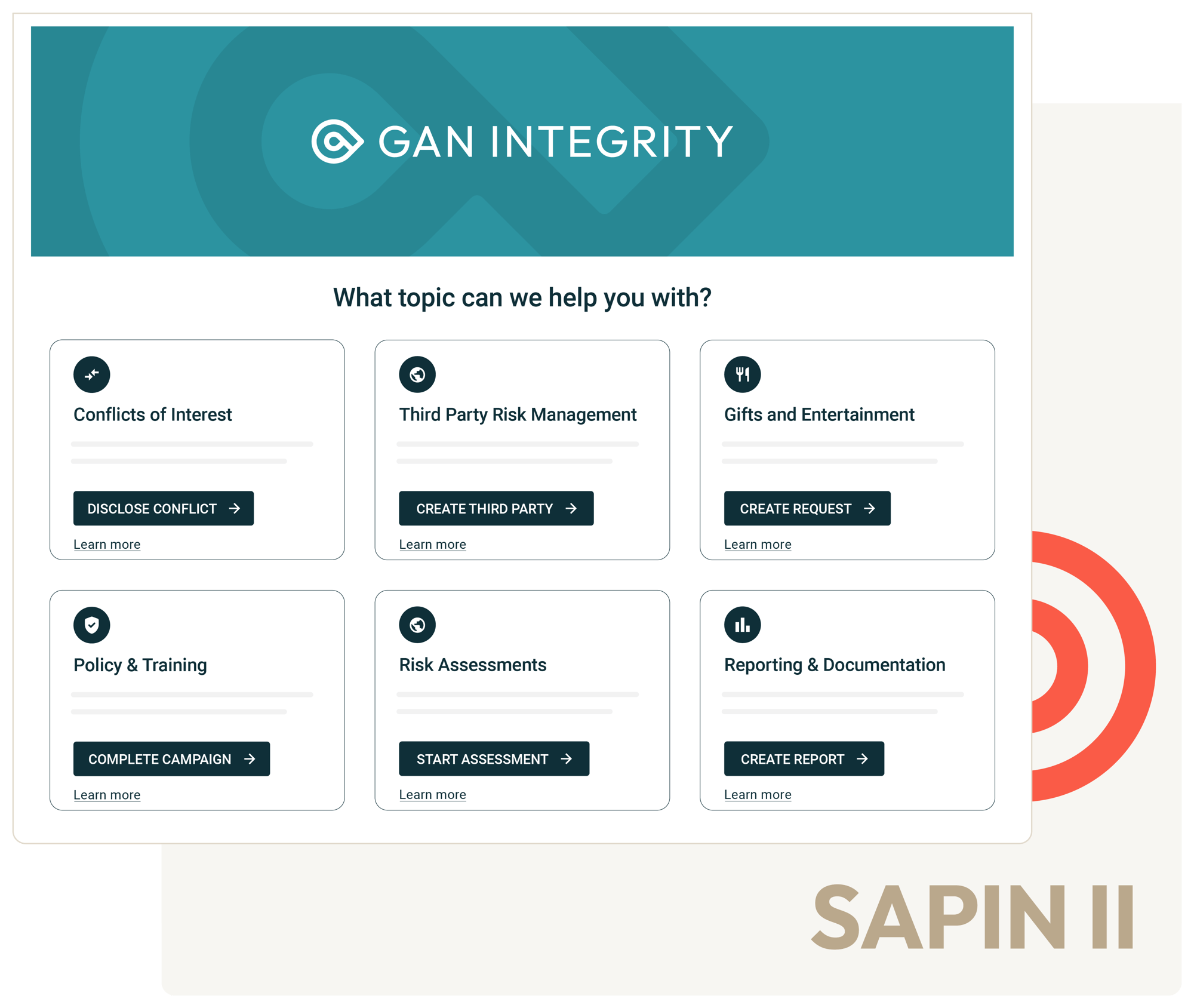
GAN Integrity for SAPIN II Compliance
GAN Integrity supports these principles through a comprehensive anti-bribery management program, enhancing every aspect of compliance.
ABAC Program Management
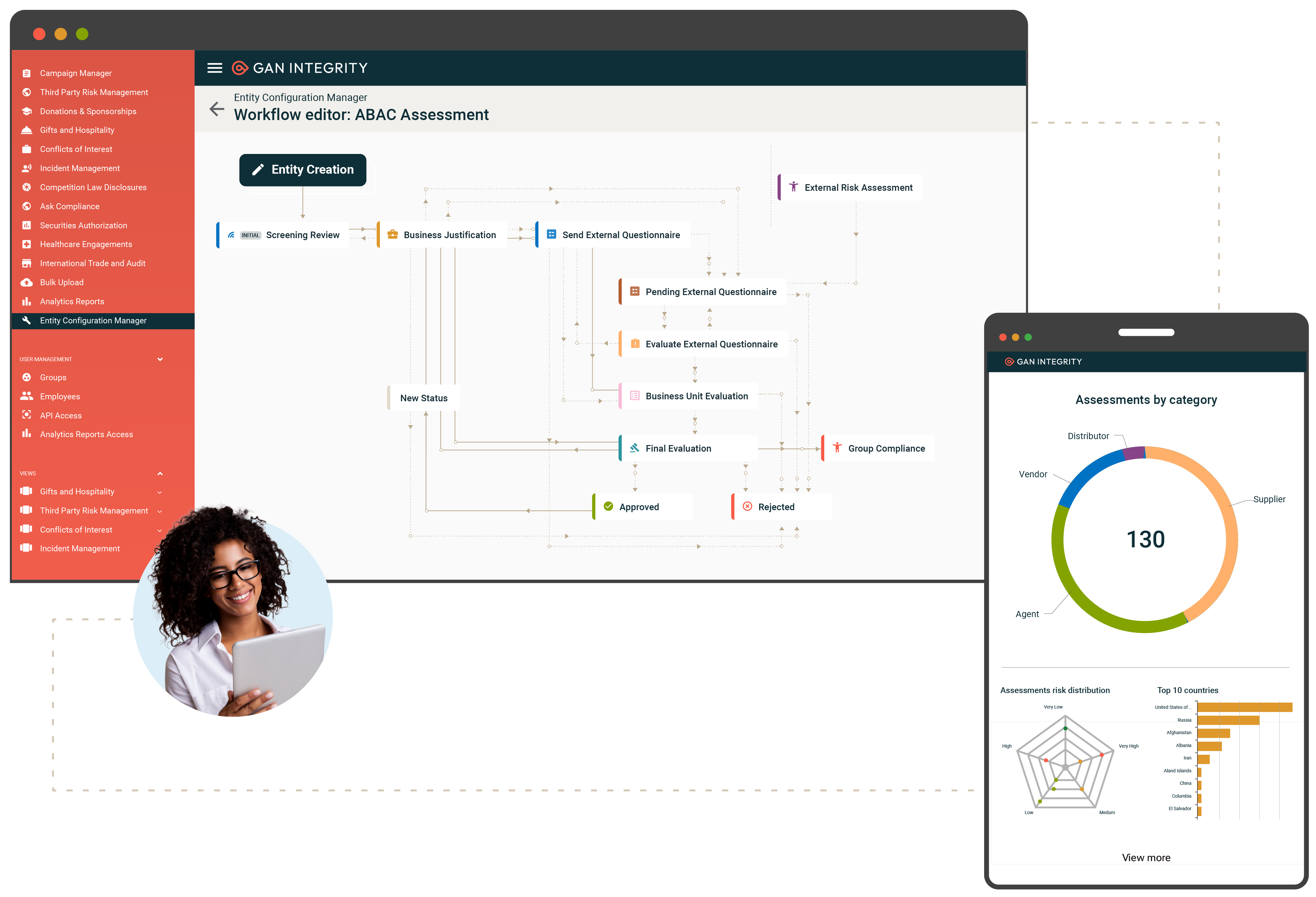
Ensure your organization upholds ethical integrity and ABAC compliance through comprehensive risk assessments, effective policy management, and continuous monitoring. Capabilities include:
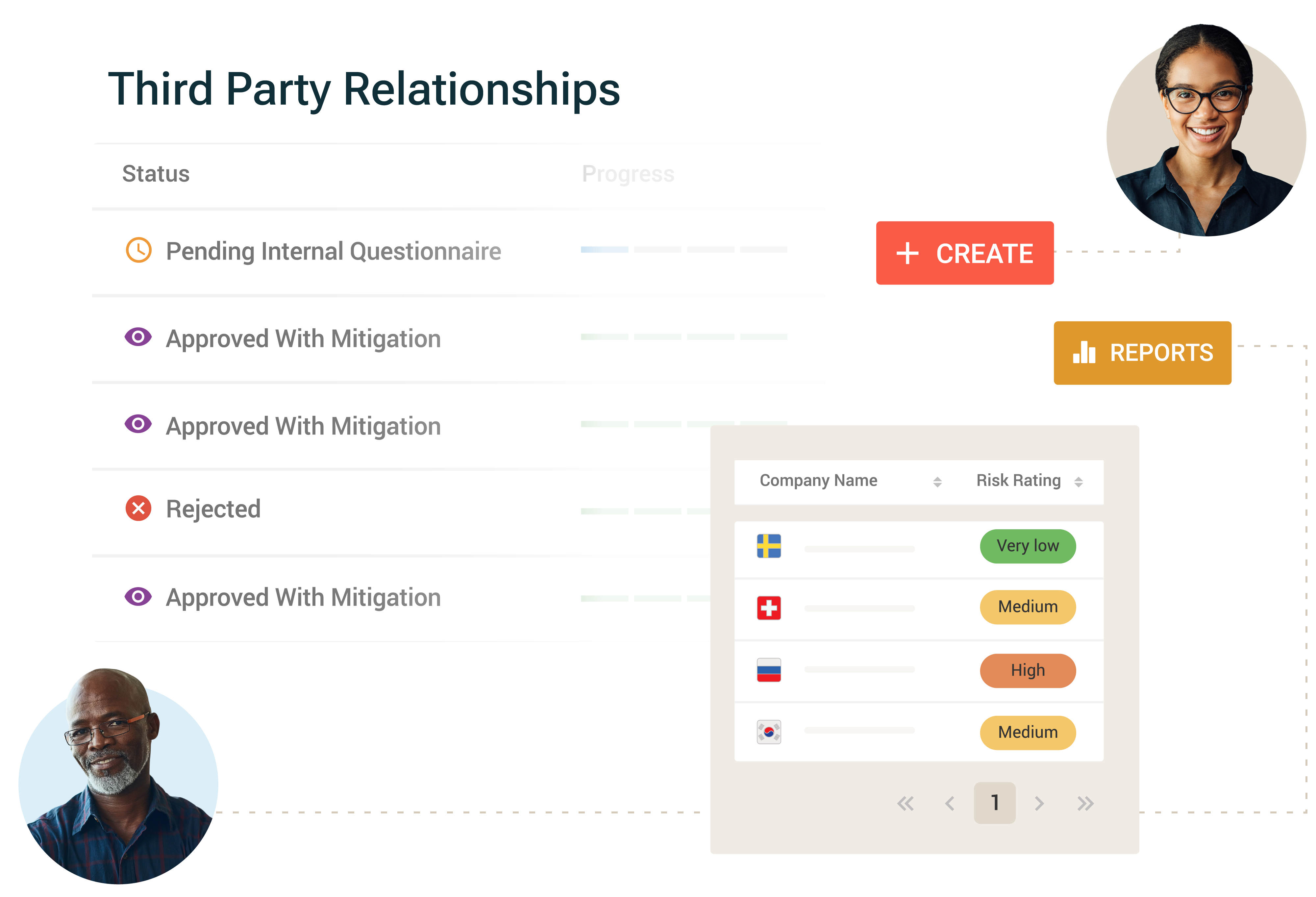
- Third-party due diligence: Mitigate bribery and corruption risks with integrated questionnaires, sanctions checks, and risk intelligence data.
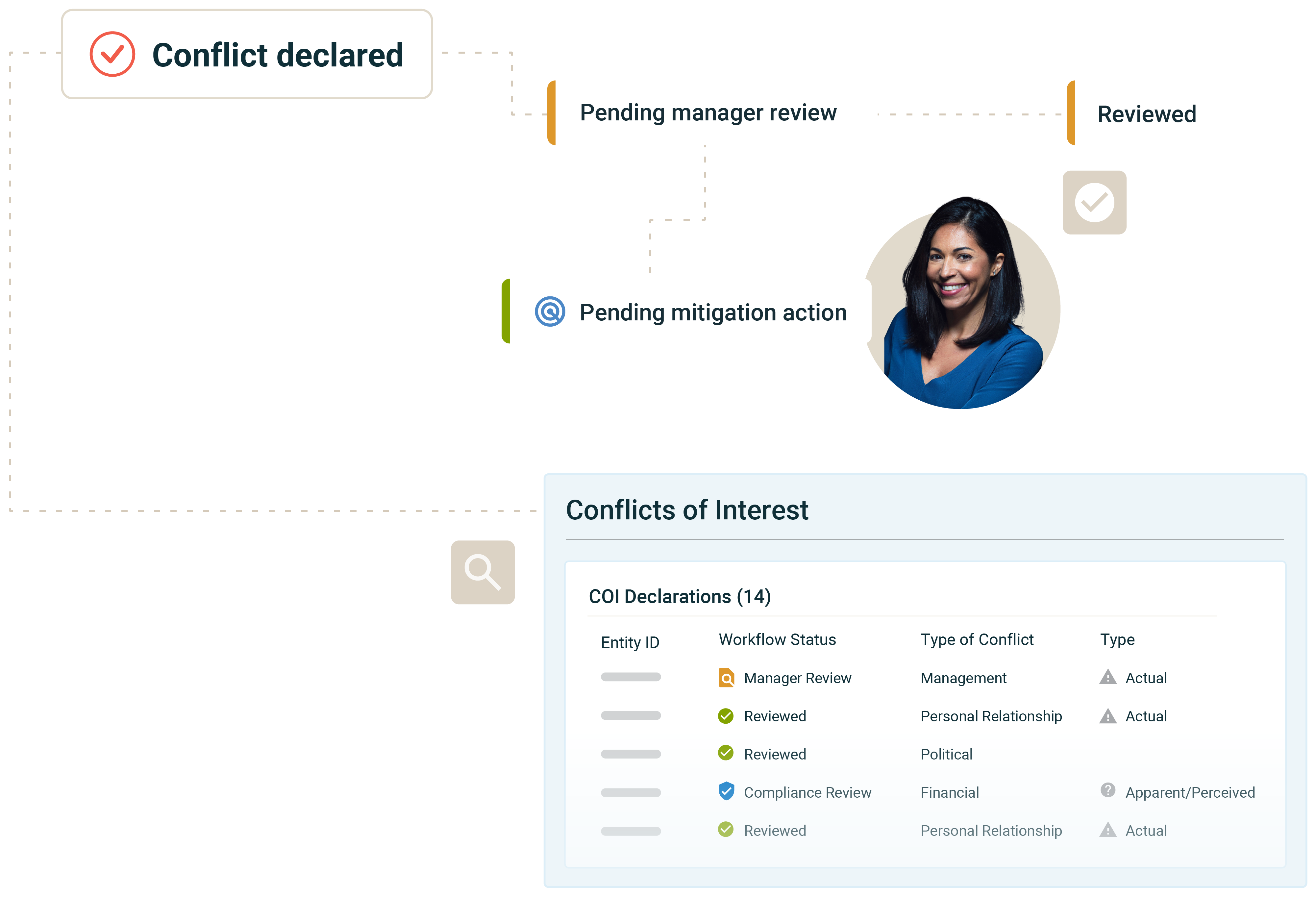
- Disclosure management: Consolidate and assess conflicts of interest (COI), gifts, travel, entertainment, and political and charitable contribution disclosures.
- Reporting and documentation: Maintain a complete audit trail and detailed reporting to easily demonstrate compliance to stakeholders and regulators.
Ready for better? Receive a personalized demo.
Schedule your personalized demo of our solutions to start your journey toward a better way to unify ethics, compliance, and risk management across your enterprise.