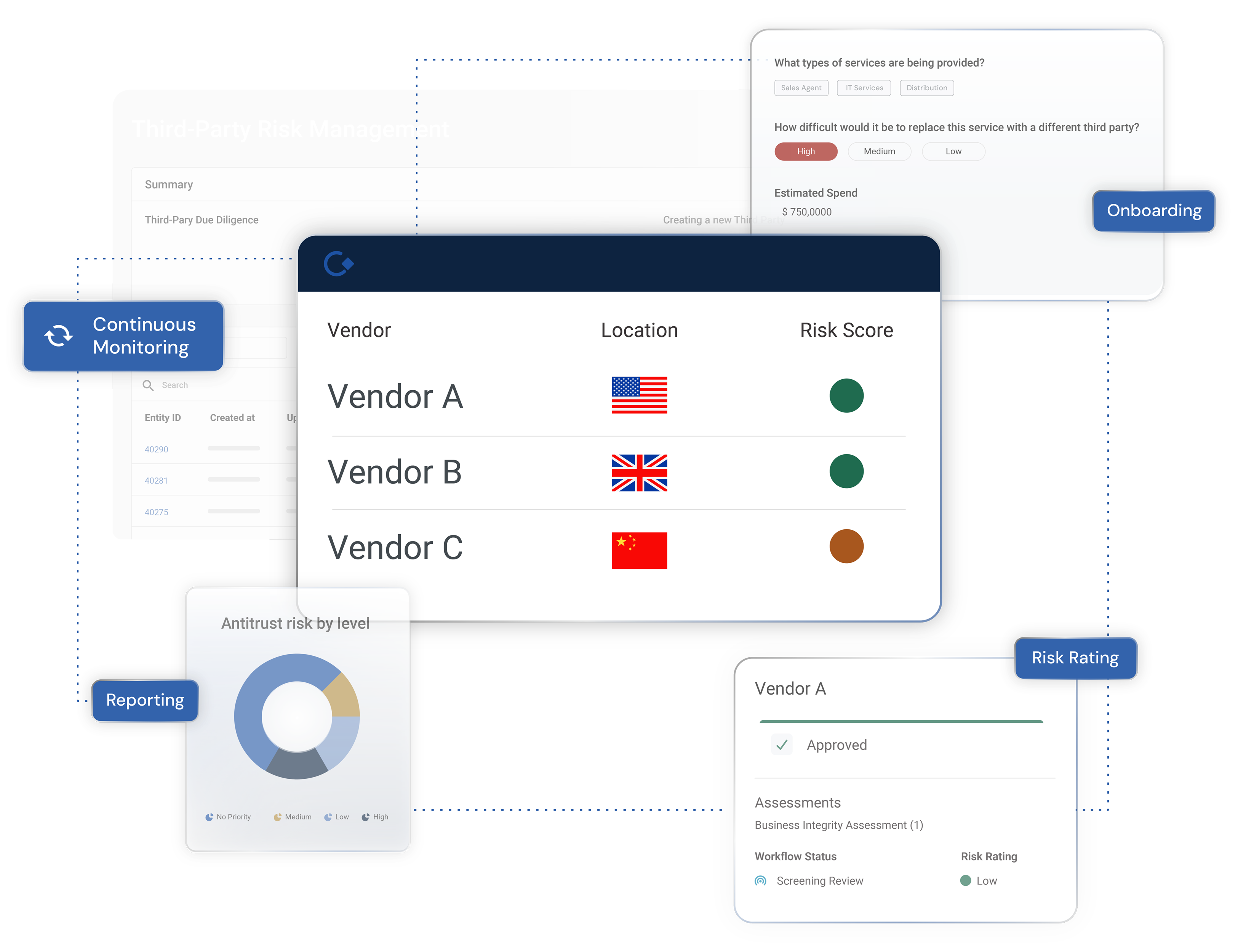



GAN Integrity Platform

Third-Party Risk Management Software

Screening, assessments, risk management and approvals in one platform. With the conflicts, gifts and cases your employees reported on the same vendor record.

Request a demo
Third-Party Risk management managing your entire workflow and analytics

Customer outcomes

Results from organizations around the globe

97%
third-party review time vs. manual processes.
medmix
70%
reduction in vendor onboarding time.
Clarios
65,000
thousand third parties managed
Global Aerospace and Defence

Case Study

Reduced onboarding time by 70%

“Our TPRM system has improved so much that our business partners have been taking notice. A lot of our business in China, specifically, is through distribution network… because they’ve gotten used to the system they complete their due diligence in only 2 days or less. It’s very quick for them and it’s extremely easy to use.”

Jill Stenseth

Sr. Global Program Manager - Ethics and Compliance

Clarios

Clarios

Clarios

How it works

A third-party risk management solution built for your compliance and supply chain requirements

Intake

The onboarding decision is a risk decision.

GAN Integrity runs risk-based screening and due diligence at intake, so the risks and issues that matter surface before the relationship starts.
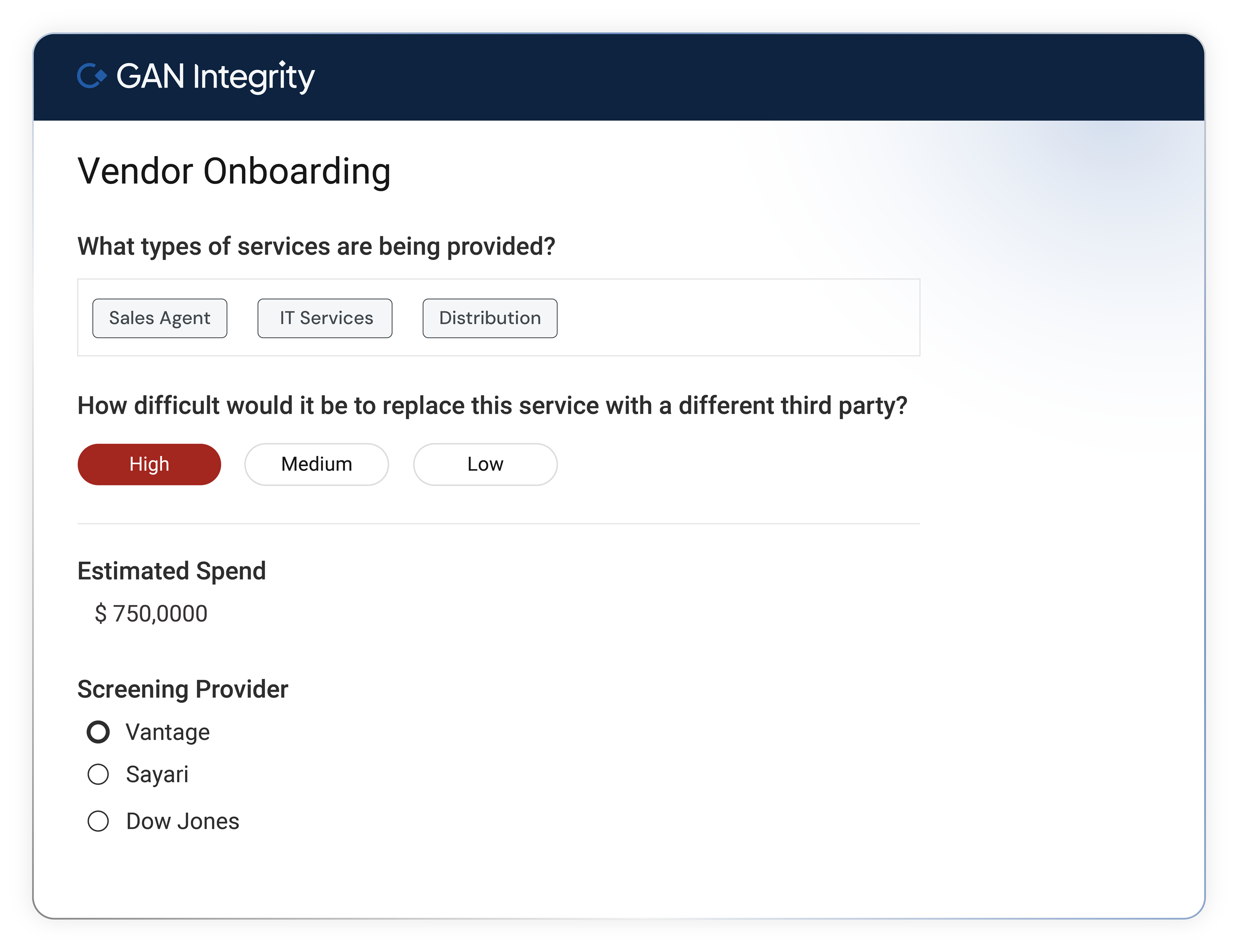
  • Risk segmentation by area, firmographics and services provided routes each third party to the right depth of scrutiny automatically. No manual triage required
  • Screening runs against the data sources your program relies on and flags what needs review before the file moves forward
  • Risk formulas configured to reflect your program's thresholds, not a vendor's default scoring model
  • Due diligence reports assembled from intake data so the team makes a decision with the full picture, not a partial one
TPRM_Onboarding
Risk Scoring

A questionnaire without a risk score is just paperwork.

GAN Integrity converts every answer into a scored risk profile with inherent risk before controls, residual risk after so the team knows exactly where a third party stands and what to do about it.

  • Inherent and residual risk scoring shows the actual exposure before and after controls are applied, not just a single aggregate number
  • Geographic risk assessment flags which jurisdictions in a third party's footprint elevate the overall profile
  • Enhanced due diligence triggers automatically when scores breach thresholds, so the right relationships get the depth of review regulators expect
TPRM_Assess-Score (2)
Ongoing Monitoring

Annual reviews miss what changes in between.

A third party that cleared screening six months ago may have been added to a sanctions list last week, changed ownership, or surfaced in adverse media. GAN Integrity monitors continuously so your program sees what changes the moment it happens, not at the next scheduled review.

  • Trigger-based reassessments kick off automatically when a pre-defined change occurs, so the right workflow starts without anyone having to notice first
  • Adverse media monitoring surfaces negative news as it breaks, not after it has become a reputational or legal issue for your organization
  • PEP screening, foreign and domestic, flags political exposure in ownership structures and key relationships that point-in-time screening would have missed

TPRM_Continuous Monitoring (2)
Triage Risk

Take action on flagged risks.

Route every risk into a defined workflow with the right scrutiny, the right approver and a clear next step. The decision gets made, documented and closed, not deferred.
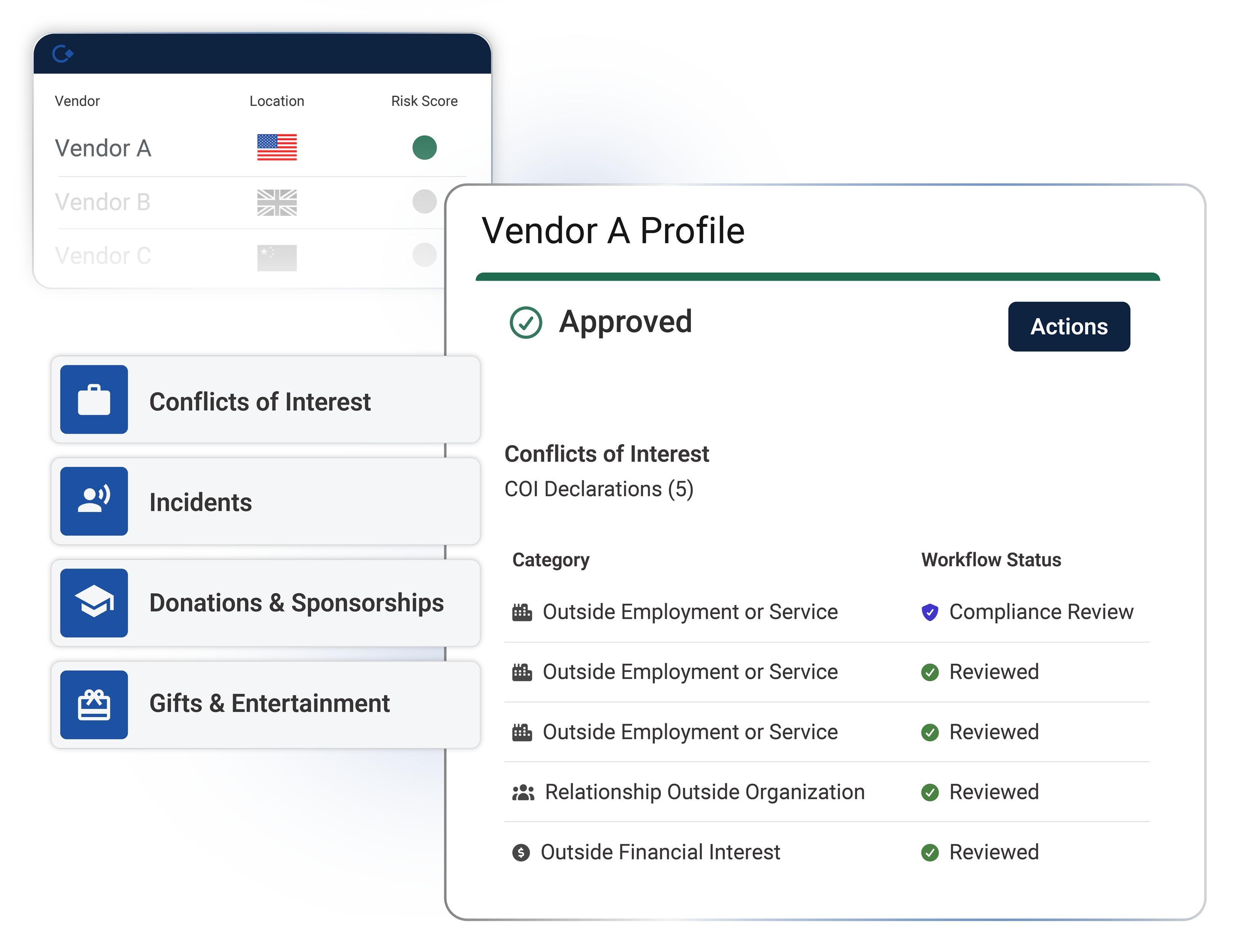
  • Risk-tiered routing sends the most pressing relationships to the right level of review automatically, so high-risk vendors do not wait behind low-risk ones
  • Approval and escalation chains assign accountability at every step, with a documented sign-off trail that holds up under audit
  • Connected compliance data surfaces when a vendor appears in a COI disclosure, a gifts record or an incident case alongside their risk file so mitigation decisions are made with the full picture  
TPRM_Risk Mitigation
Reporting & Analytics

When your stakeholders ask, you should already have the answer.

GAN Integrity turns your third-party risk data into board-ready and regulator reporting without a BI team or a Friday afternoon building slides. Ask the question in plain language. Get the dashboard.
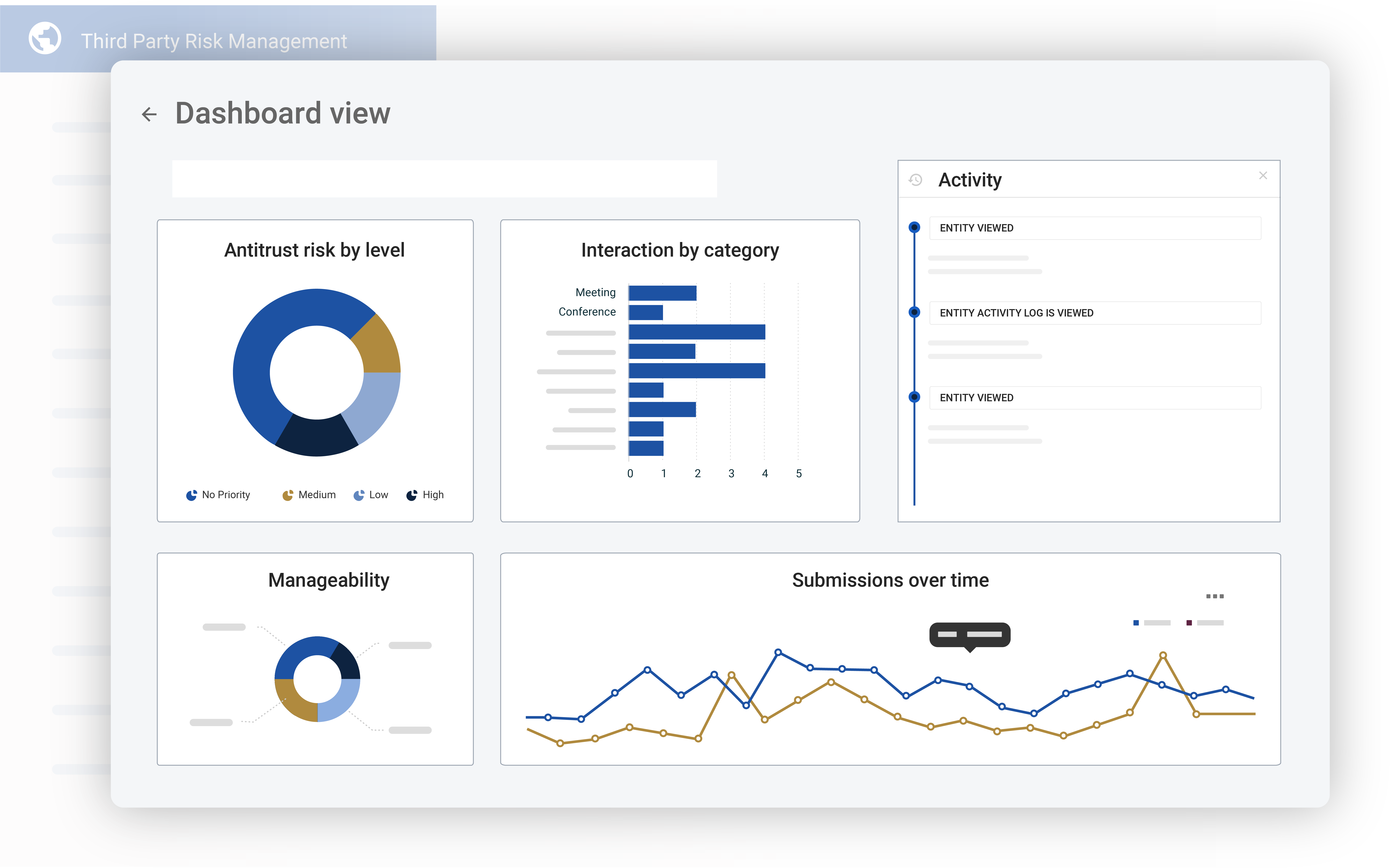
  • AI Stories generates a ready-made talk track from your dashboard data, so the story behind the numbers is written for you to review
  • Dashboard generator builds a complete visualization from a plain-language prompt, no templates to configure and no analyst to brief
  • Pre-built TPRM dashboards give your program a reporting foundation on day one, with full flexibility to configure as your program matures
GAN_Product_tprm reporting

Due Diligence and Risk Intelligence

The depth built on a network of the top screening providers

Sharper matches, enhanced due diligence reporting, and continuous monitoring built from multiple specialized data sources instead of one generalist feed


Adverse media, Sanctions
Real-time, AI-powered adverse media monitoring flags reputational and export-control exposure the moment it surfaces, not weeks later
Sanctions | PEPs | Watchlists | Adverse Media | EDD
Human-intelligence powered ABAC, ESG, and human rights due diligence that automated data alone can't replicate
Trade Compliance | Supplier Networks | Export Controls | EDD
Screen counterparties across sanctioned jurisdictions where beneficial ownership is hidden behind layers of shell companies. Map a supply chain back to source across dozens of countries. Trace a network that was designed to be invisible.
Due Diligence | Adverse Media | ownership | UBO
For sanctions and PEP screening backed by curated, structured adverse media for fewer false leads and a cleaner evidence trail on financial crime investigations
Moodys UBO, Adverse Media, Sanctions, PEPS
Global entity data, registry-based verification, and ownership insight, combined with sanctions, PEPs, watchlists and adverse media.

Analyst Recognition

Recognized by the analysts who define the market.

Verdantix
Smart Innovator 2025

Market-leading functionality in 5 of 11 core capabilities among 150+ vendors.

Read more the TPRM market
Gartner
TPRM Magic Quadrant Q1, 2026

Challenger, recognized for its strong market understanding and broad solution coverage.

Learn more

GRC 20/20
2025 GRC Innovation Award Winner

Category of Third-Party GRC/Risk Management Solutions for its groundbreaking platform.

Access the research

Measure Your Results

TPRM Maturity Assessment

If a regulator asked you tomorrow to prove your TPRM program is working, could you? Find out where you stand. Then close the gaps.

We required a solution that could be deployed quickly, aligned with our operating model, and could be centrally managed. The goal was to move from fragmented local tools to a unified system that provided global visibility while supporting diverse regulatory regimes.

Rene Keiser Chief Compliance Officer, medmix

Resources

TPRM resources for compliance and third-party risk teams

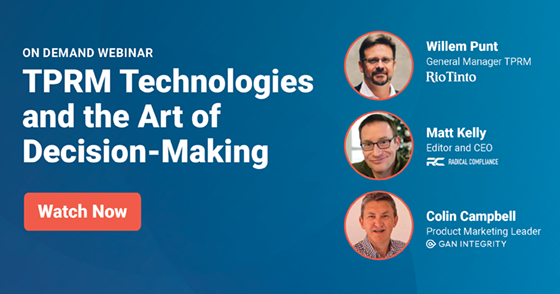
ODWebinar-TPRM-Tech_560x294
Webinar

TPRM Technologies & the Art of Decision Making

Frequently Asked Questions

Why can't my team use spreadsheets for managing TPRM?
Spreadsheets break down in TPRM at scale and under regulatory scrutiny. They have no audit trail. If a regulator asks how you assessed a specific vendor 18 months ago, a spreadsheet can't prove what you knew and when. They also can't monitor continuously: a third party that passed due diligence last year may have since appeared on a sanctions list, received adverse media coverage, or had a financial rating change. Most compliance teams reach a tipping point around 500–1000 active third parties where manual tracking creates material gaps. TPRM software automates screening, flags changes in real time, and produces the documented evidence trail regulators expect under frameworks like the DOJ's Evaluation of Corporate Compliance Programs, FCPA and EU CSDDD.
All TPRM software demos look the same. How do I choose the right TPRM vendor?
Most TPRM demos look identical because vendors run scripted walkthroughs on pre-loaded data designed to hide configuration limits. To separate genuine flexibility from a polished presentation, run three tests. First, ask the vendor to make a real-time change to a workflow during the demo. Add an approval step, change a risk threshold and watch whether it cascades correctly into reporting. Second, bring a real third-party scenario from your own business and ask them to map it live: a supplier in a high-risk jurisdiction, a conflict minerals disclosure, a sanctions hit mid-relationship. Third, ask who makes configuration changes post-implementation. If the answer involves a professional services engagement or a support ticket, the platform isn't as self-serve as the demo suggests. If a vendor needs to follow-up on any of these, you have your answer.
What if I buy a third-party risk management solution and my business units don't use it?
Low adoption is a system killer. If the interface is cumbersome or unintuitive, your TPRM program will fail. Ease of use is non-negotiable when evaluating TPRM vendors, as a wide range of stakeholders must interact with the system. Your solution must have a user-friendly interface that actively encourages business user engagement, not just compliance team oversight.
We're drowning in vendor data. How should a 3rd party risk management solution turn noise into vendor intelligence?
Third-party data is useless if it's fragmented and outdated. The entire point of an effective risk-scoring system is to translate the vast amounts of information you gather into actionable intelligence. Your software must do more than just collect data; it needs to consolidate it, apply your company's custom risk ratings, and automatically update scores to provide the broadest, real-time view of risk.
How do I evaluate a TPRM vendor's AI claims without falling for the hype?
Focus on augmented intelligence, not just artificial intelligence. The goal isn't to replace human judgment; it's to augment it. First, define the concrete problem you need to solve, like cutting down on false positives or managing data overload. Then, ask TPRM vendors how their AI supports your team's decision-making by reducing data noise and delivering summarized, relevant insights.
My leadership team is demanding better TPRM visibility. How does a TPRM solution stop the scramble for reports?
Stop scrambling to piece together data from different systems or spreadsheets for management reports. Quality reporting is essential for informed decision-making and good governance. A strong 3rd party risk management solution must provide clear, actionable insights via dashboards that update in real-time. Your users should be able to easily build their own reports and drill into the underlying data for a holistic view of third-party risk.
My team already runs sanctions checks. Is that enough for third-party due diligence?
Vendor sanctions checks are just the start. Check-the-box screening is how you get blindsided. Due diligence is critical, and the financial, operational, and reputational risks of getting it wrong are substantial. You need a third-party risk management solution that automates faster, more accurate screening and provides real-time dynamic monitoring. Ask your vendor how their software reduces false positives and if it can handle complex ESG, human rights, and beneficial ownership screening.

See a demo built around your third-party population