

Disclosures
Conflicts of Interest
Automatically link COI disclosures to your third-party records to fill all the gaps
Learn moreGAN Integrity Platform
Screening, assessments, risk management and approvals in one platform. With the conflicts, gifts and cases your employees reported on the same vendor record.
Trusted by compliance teams at global enterprises

Customer outcomes
Results from organizations around the globe
Case Study
“Our TPRM system has improved so much that our business partners have been taking notice. A lot of our business in China, specifically, is through distribution network… because they’ve gotten used to the system they complete their due diligence in only 2 days or less. It’s very quick for them and it’s extremely easy to use.”
Jill Stenseth
Sr. Global Program Manager - Ethics and Compliance

Clarios
How it works
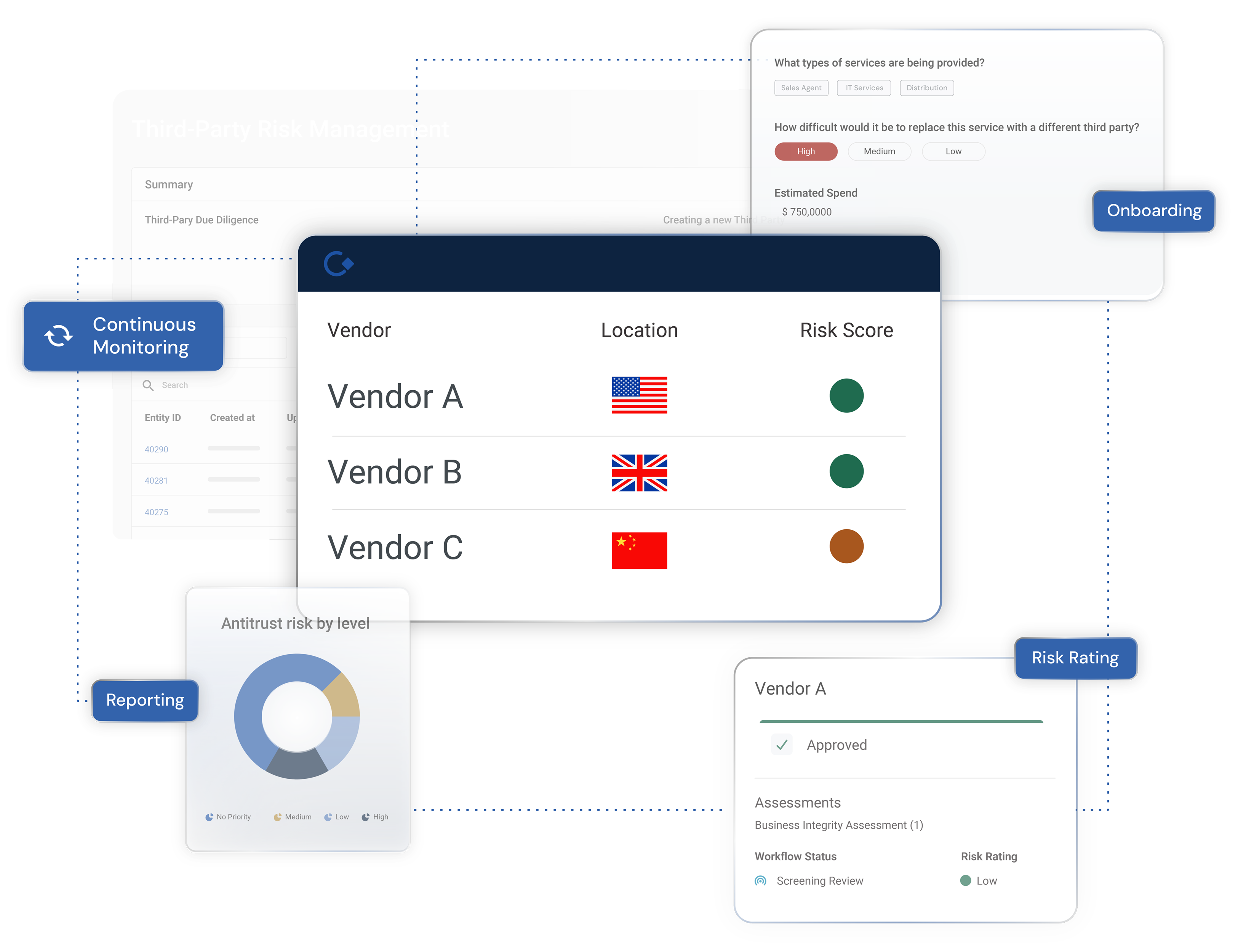
GAN Integrity runs risk-based screening and due diligence at intake, so the risks and issues that matter surface before the relationship starts.
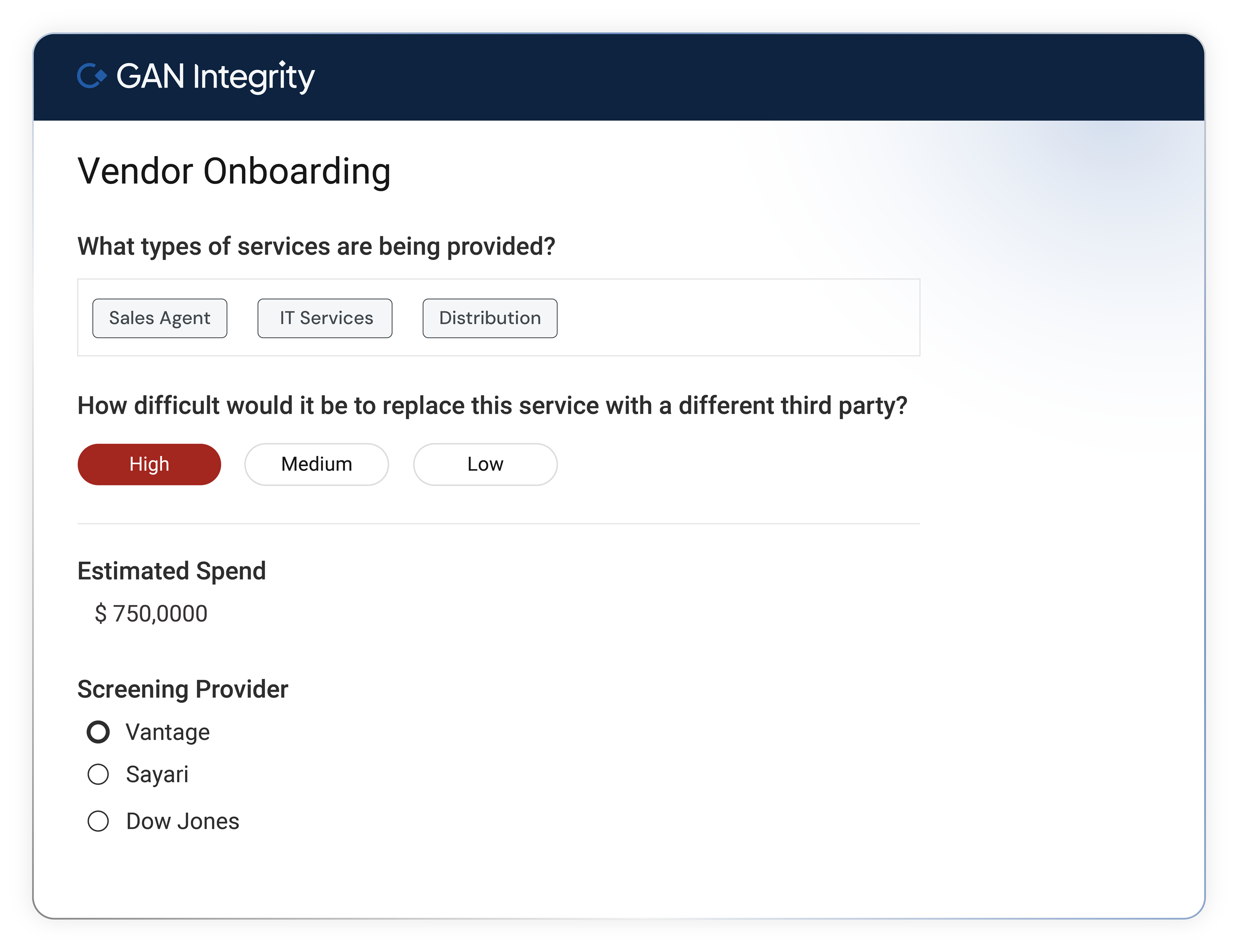
GAN Integrity converts every answer into a scored risk profile with inherent risk before controls, residual risk after so the team knows exactly where a third party stands and what to do about it.
A third party that cleared screening six months ago may have been added to a sanctions list last week, changed ownership, or surfaced in adverse media. GAN Integrity monitors continuously so your program sees what changes the moment it happens, not at the next scheduled review.
Route every risk into a defined workflow with the right scrutiny, the right approver and a clear next step. The decision gets made, documented and closed, not deferred.
GAN Integrity turns your third-party risk data into board-ready and regulator reporting without a BI team or a Friday afternoon building slides. Ask the question in plain language. Get the dashboard.
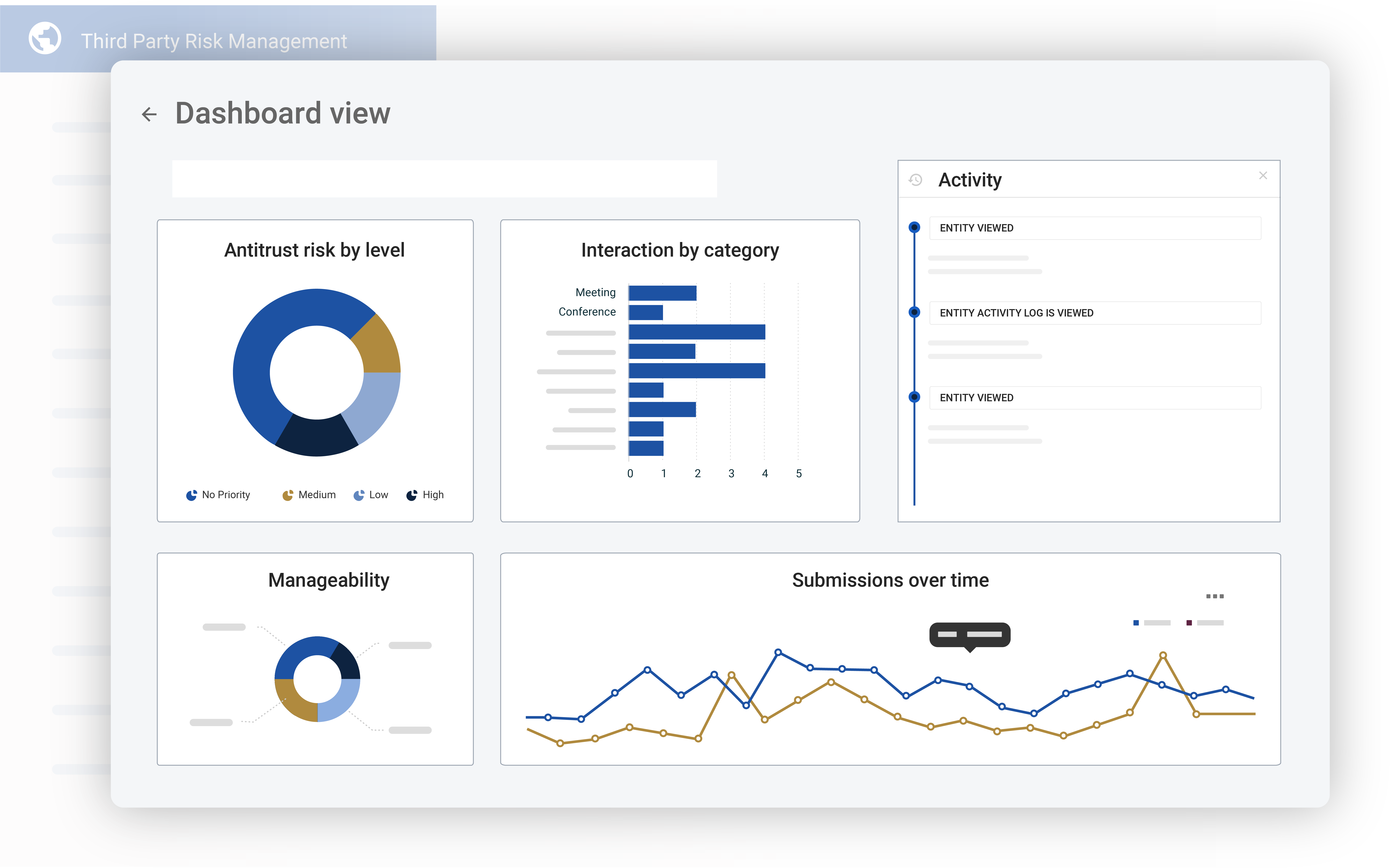
Due Diligence and Risk Intelligence
Sharper matches, enhanced due diligence reporting, and continuous monitoring built from multiple specialized data sources instead of one generalist feed

Analyst Recognition

GAN Integrity assessed with market-leading functionality in 5 of 11 core capabilities among 150+ vendors.
Read more the TPRM market
GAN Integrity recognized as a Challenger, citing our strong market understanding and extensive risk domain coverage.
Learn more

Our Integrity Essential™ solution selected as the innovation winner in the TPRM category.
Access the researchMeasure Your Results
If a regulator asked you tomorrow to prove your TPRM program is working, could you? Find out where you stand. Then close the gaps.
Connected programs
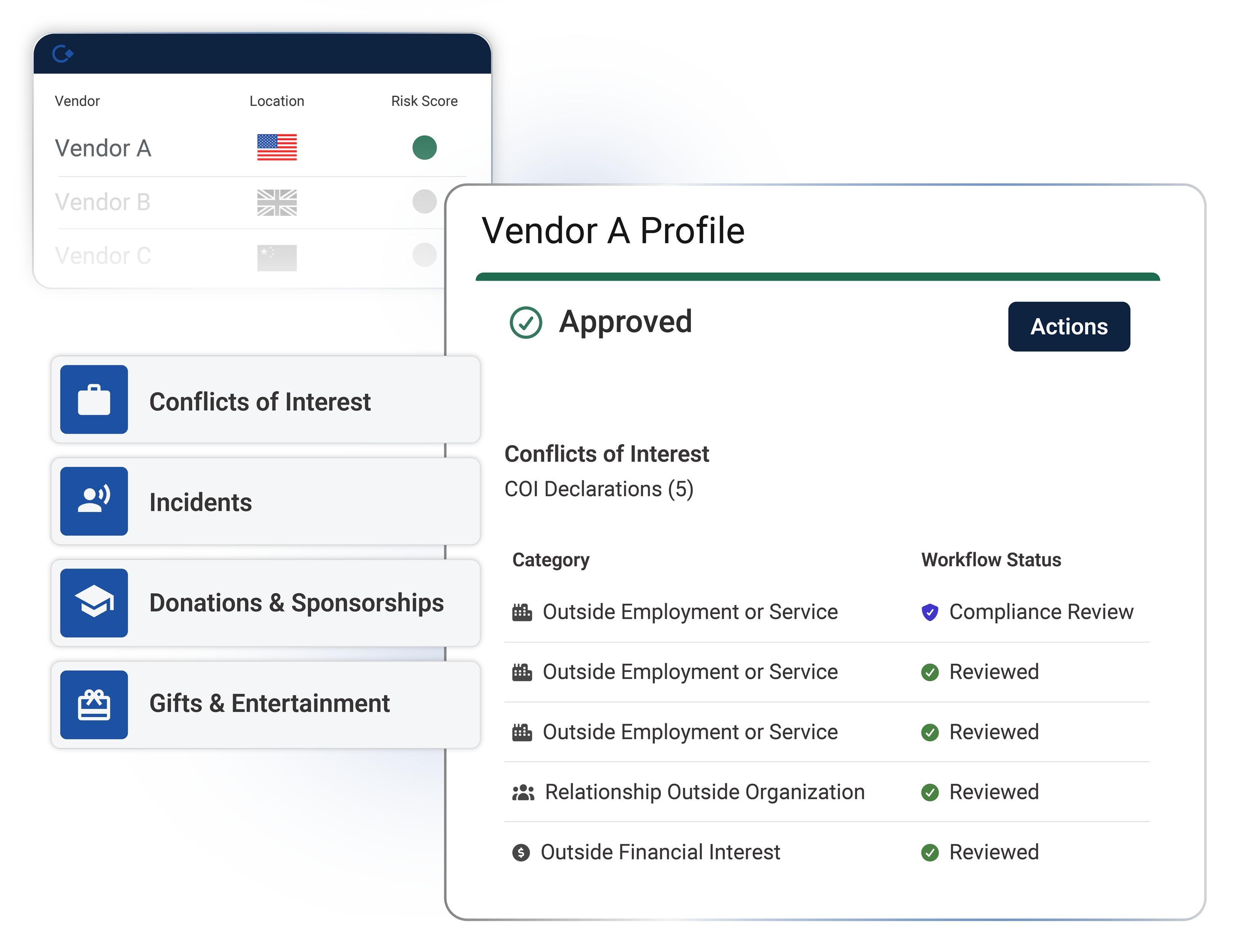
The conflict of interest an employee declared. The gift they accepted. The open hotline case. All of it sits on the same record, so the reviewer approving the third party sees it.
Disclosures
Automatically link COI disclosures to your third-party records to fill all the gaps
Learn moreDisclosures
Ensure no vendor gift goes unreviewed, unapproved, or undocumented
Learn moreIncident Management
Tie incidents back to vendors for deeper insights on fraud, waste, bribery, corruption for investigations
Learn moreDisclosures
Catch blind spots between vendors and charitable donations before regulators do
Learn more“We required a solution that could be deployed quickly, aligned with our operating model, and could be centrally managed. The goal was to move from fragmented local tools to a unified system that provided global visibility while supporting diverse regulatory regimes.”
Rene Keiser Chief Compliance Officer, medmix
Resources
Frequently Asked Questions
Third-party risk management software is a system of record for identifying, screening, scoring, monitoring and offboarding the external parties an organization does business with, including vendors, suppliers, distributors, agents and intermediaries. It replaces spreadsheet tracking with automated screening against sanctions, PEP and adverse media sources, configurable risk scoring, and a documented evidence trail regulators can audit. Compliance-led programs use it to meet obligations under the FCPA, the UK Bribery Act, the EU CSDDD and the German Supply Chain Act.
Third-party risk management covers every external relationship, while vendor risk management covers the subset that supplies goods and services. The distinction matters in practice because agents, distributors, joint venture partners and intermediaries carry bribery and sanctions exposure that a vendor-focused security programme is not built to assess. Separately, most tools marketed as TPRM assess cyber risk. Integrity risk, conflicts of interest and beneficial ownership require a different data set and a different owner inside the business.
Spreadsheets break down in TPRM at scale and under regulatory scrutiny. They have no audit trail. If a regulator asks how you assessed a specific vendor 18 months ago, a spreadsheet can't prove what you knew and when. They also can't monitor continuously: a third party that passed due diligence last year may have since appeared on a sanctions list, received adverse media coverage, or had a financial rating change. Most compliance teams reach a tipping point around 500–1000 active third parties where manual tracking creates material gaps. TPRM software automates screening, flags changes in real time, and produces the documented evidence trail regulators expect under frameworks like the DOJ's Evaluation of Corporate Compliance Programs, FCPA and EU CSDDD.
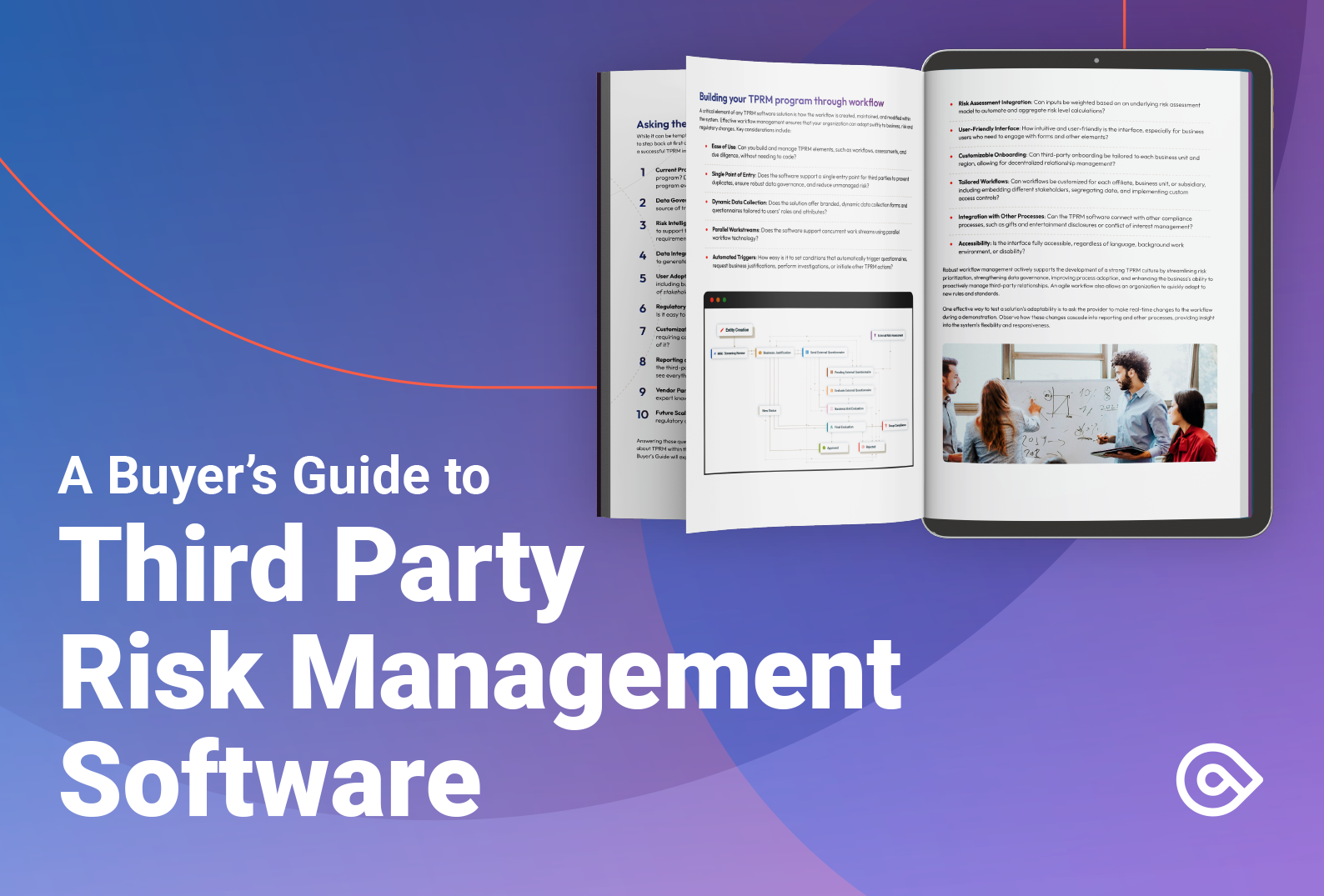
Most TPRM demos look identical because vendors run scripted walkthroughs on pre-loaded data designed to hide configuration limits. To separate genuine flexibility from a polished presentation, run three tests. First, ask the vendor to make a real-time change to a workflow during the demo. Add an approval step, change a risk threshold and watch whether it cascades correctly into reporting. Second, bring a real third-party scenario from your own business and ask them to map it live: a supplier in a high-risk jurisdiction, a conflict minerals disclosure, a sanctions hit mid-relationship. Third, ask who makes configuration changes post-implementation. If the answer involves a professional services engagement or a support ticket, the platform isn't as self-serve as the demo suggests. If a vendor needs to follow-up on any of these, you have your answer.
Low adoption is a system killer. If the interface is cumbersome or unintuitive, your TPRM program will fail. Ease of use is non-negotiable when evaluating TPRM vendors, as a wide range of stakeholders must interact with the system. Your solution must have a user-friendly interface that actively encourages business user engagement, not just compliance team oversight.
Third-party data is useless if it's fragmented and outdated. The entire point of an effective risk-scoring system is to translate the vast amounts of information you gather into actionable intelligence. Your software must do more than just collect data; it needs to consolidate it, apply your company's custom risk ratings, and automatically update scores to provide the broadest, real-time view of risk.
Focus on augmented intelligence, not just artificial intelligence. The goal isn't to replace human judgment; it's to augment it. First, define the concrete problem you need to solve, like cutting down on false positives or managing data overload. Then, ask TPRM vendors how their AI supports your team's decision-making by reducing data noise and delivering summarized, relevant insights.
Stop scrambling to piece together data from different systems or spreadsheets for management reports. Quality reporting is essential for informed decision-making and good governance. A strong 3rd party risk management solution must provide clear, actionable insights via dashboards that update in real-time. Your users should be able to easily build their own reports and drill into the underlying data for a holistic view of third-party risk.
Vendor sanctions checks are just the start. Check-the-box screening is how you get blindsided. Due diligence is critical, and the financial, operational, and reputational risks of getting it wrong are substantial. You need a third-party risk management solution that automates faster, more accurate screening and provides real-time dynamic monitoring. Ask your vendor how their software reduces false positives and if it can handle complex ESG, human rights, and beneficial ownership screening.
Every demonstration is personalized to your program.